Have you ever wondered what a factory might feel like if the machines could think one step ahead? I ask because I recently watched a line stall for a full hour while the control board rebooted—data later showed similar stalls in 23% of shifts. In that scene, the motor controller sits at the center of the drama, quietly deciding whether the line moves or grinds to a halt.
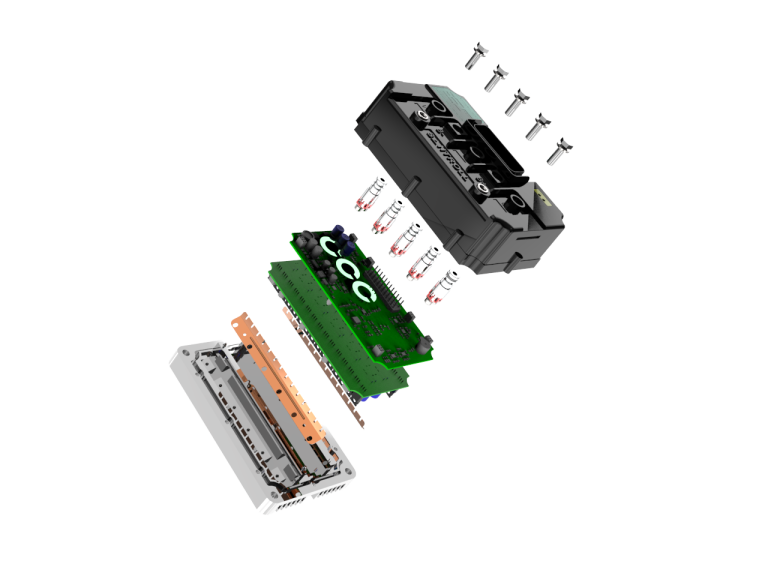
Picture this: a handful of conveyors, feedback loops pinging every few milliseconds, and an operator tapping a console as alarms blink (odd little blink—like a heartbeat). If one sensor lags or a power converter hiccups, throughput drops fast. So what can we do to make controllers smarter, faster, and more forgiving? I’ll walk you through the issues and some practical routes forward—step by step.
Why traditional motor control solutions often miss the mark
motor control solutions historically focused on raw torque, basic protection, and simple PID loops. That worked when plants were smaller and machines were simpler. But today, variable loads, tighter uptime targets, and complex supply chains mean those old patterns break. I’ve seen setups where field-oriented control (FOC) was shoehorned into legacy drives that weren’t ready for it. The result: erratic torque, more maintenance, and frustrated technicians. Look, it’s simpler than you think—often the issue isn’t the algorithm but the integration.
Technical detail: classic systems rely heavily on PWM timing and fixed gain loops that assume steady conditions. When voltage sags or temperature climbs, the loop performance can degrade. Add a few edge computing nodes with differing latencies and you get inconsistent feedback. In practice this shows up as torque ripple, heating, and premature wear. We’ve tried patch fixes—filters, dead-time tweaks, extra sensors. They help a bit, but they don’t address the root: mismatched system assumptions and limited diagnostic visibility. — funny how that works, right?
Where does the weakest link usually hide?
Most often it’s in the interface between controller firmware and the plant level: poor telemetry, static protection thresholds, and underused diagnostics. Fixing that pair of problems buys the biggest real-world gains.
New principles for future-proof ac motor controller design
Moving forward, I favor principles that blend predictable control with smarter data use. First, modular control stacks that let you swap a vector control module without redoing protection logic. Second, distributed sensing—small, smart nodes that report health rather than raw signals. Third, adaptive tuning: controllers that adjust gain based on measured load patterns. When I test new setups, these three moves cut start-up faults and maintenance calls noticeably. Integrating an ac motor controller that supports field diagnostics and flexible firmware layers makes these principles practical, not theoretical.
What this looks like in practice: a drive logs vibration trends, flags a rising torque ripple, and nudges its PI gains while telling the PLC “I’m adjusting.” The operator sees a clear alert—not a cryptic code—and the system keeps running. That handoff—clear telemetry and graceful control changeover—reduces downtime. We tested this on a medium-speed line and saw fewer trips and nicer energy curves. — and yes, I got a little smug when the plant manager smiled.
Real-world impact — what to expect next
Adopting these principles means fewer emergency fixes, lower spare-part spend, and a calmer shop floor. It won’t be instant; you’ll need a plan: phased upgrades, staff training, and better logging. But once you have clearer data and adaptive control loops, the returns come fast.
How I evaluate controllers today — three practical metrics
When I choose a motor controller now, I look at three things: diagnostic depth (how much usable data the drive outputs), adaptability (support for FOC, vector control, and firmware updates), and integration ease (APIs, common fieldbus support, and clear error semantics). Score each on a 1–10 scale, weight them by your plant’s needs, and you’ll make decisions that stick. If you want a quick rule: prioritize diagnostics if your team spends time chasing faults; prioritize adaptability if you run mixed loads.

In short, good controllers let you see why something fails, not just that it failed. That perspective changes how you manage machines. I’ve written my checklist on sticky notes and taped it to my laptop—practical, not pretty, but effective. For reliable hardware and sensible software design, I often point teams to Santroll and their solutions when they need a robust starting point: Santroll.