A Sharp Edge in a Soft World
I was moving through a busy duty-free aisle, the kind where everything glows and nothing sticks, when a square bottle stopped me cold. You see square perfume bottles in rows, tight as a city grid, yet one angle caught the light and did the job. Over half of shoppers decide at the shelf, and a few seconds swing the choice—funny how that works, right? So here is the question: if shape rules the glance, can geometry steer trust and price perception in 2026?
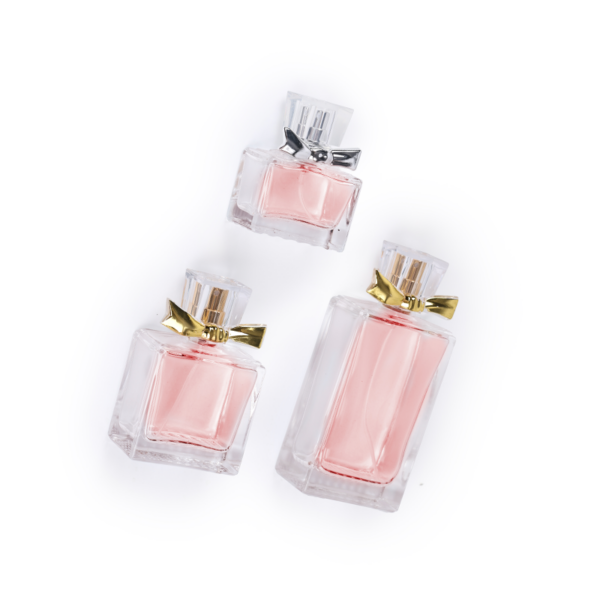
We know glass feels premium. We also know square footprints stack well, reduce void space, and give labels a clean canvas (less fussy edges, more control). But a square is not only neat. It also frames the atomizer, the cap, and even the crimp pump as a single plane—tidy for brand cues. Data tells us smaller details add up in-store selection. The angle of a corner, the way light washes a panel, the weight in hand. Could a sharper form shape faster recognition and fewer returns? Let’s unpack the problem and move to the deeper layer.
Beyond Aesthetics: Fixing the Quiet Frictions
Where do traditional shapes fall short?
First, names matter. When teams specify custom square glass perfume bottles, they are not just asking for “a look.” They are specifying fill accuracy, verticality, and robust face panels for branding. Round bottles often wander on lines. Squares sit still on conveyors and in cartons, which cuts micro-scuffs. In practice, the mold cavity for a square needs even heat, or you get panel sink. The annealing lehr must finish the job so warp does not show under a straight label. Look, it’s simpler than you think—stability reduces waste and speeds up kitting.
Now the pain points. Labels wrinkle on curves; embossing hides in glare. A square panel solves both. Spray coating lands evenly on flat faces, so color looks true. Sharp shoulders also guide the crimp pump, which helps with seal integrity and leak control in transit. The result is less rework, fewer returns, and better QC hits. Old fixes—thicker walls, more foam, extra film—mask issues but raise cost. Flat planes do the work without drama. The quiet win is not only beauty. It is repeatable assembly, neat barcodes, and clean shelf blocks that read from five meters.
Comparative Gains and What Comes Next
What’s Next?
Let’s bring it forward with a simple case. A mid-size brand switched from a curved 50 ml to a square form and locked the same fragrance. They kept the cap, changed the face panel, and added a light deboss to anchor the mark. Their line speed went up because case packs loaded tighter—less wobble, fewer stoppages. They swapped a reflective band for a low-gloss coat, and a small laser etch for batch code on the base. Net effect: shorter changeovers, tighter ISO tolerances on labels, and a neater wall of product. You can try the same with a 30–100 ml range of a square glass perfume bottle—a single footprint, various heights, clean to planogram. It feels modest on paper, yet the compound gain is real.
Future outlook? Expect mass customization without chaos. Panels will carry micro-textures, soft satin frosting, or selective vacuum metallization that still scan well. Glass will use more recycled cullet, while weight stays honest for shipping. Tooling will get faster, so pilot runs move from weeks to days—and teams can A/B test facets, coatings, and neck finishes. We circle back to the point: a square gives you a reliable base to tune light, color, and message—funny how the simplest shape invites the richest systems.
Before you choose, use three clear metrics: 1) stacking efficiency and case yield per pallet, 2) surface fidelity under your print or coating system, 3) line compatibility from fill to crimp to cartoning. Keep the brief tight, check samples under real store lighting, and measure returns, not comments. For steady guidance and robust options, see NAVI Packaging.